World | Europe
Iran Claims Victory in the War. Here Is Whether That Is True
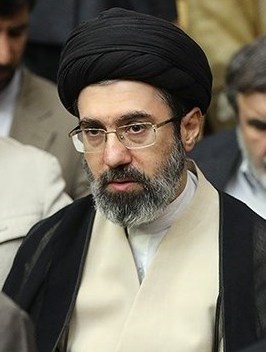
Mojtaba Khamenei declared Iran the 'definite victor' of the 40-day war. Trump says the US met all its military objectives. Here is an honest assessment of who actually achieved what.
Two Sides, Two Victory Claims, One Complex Reality
On Thursday April 9, 2026, the 40th day of mourning for the late Supreme Leader Ali Khamenei whose assassination on February 28 launched the war, Iranian state television read a statement attributed to his son and successor Mojtaba Khamenei declaring Iran the "definite victor" of the conflict. The statement said Iran had "not sought war" and acknowledged the cost — "we will certainly demand compensation for each and every damage inflicted, and the blood price of the martyrs" — while simultaneously asserting that Iran's core rights had been preserved.
Days before, Trump had made his own victory declaration on Truth Social: "This will be a double sided CEASEFIRE! The reason for doing so is that we have already met and exceeded all Military objectives." Earlier in the war, he had described Iran's military as effectively destroyed and claimed success in degrading its nuclear program, air force, and ballistic missile capacity.
Both of these claims are simultaneously accurate and incomplete, and the particular degree to which each is credible depends on the specific metrics the claimant chooses to emphasize while de-emphasizing others. This is the standard analytical challenge of postwar victory assessment: everyone claims victory, and the genuine accounting requires separating stated objectives from achieved outcomes across multiple dimensions.
The specific honest assessment requires examining each side's pre-war objectives and measuring actual outcomes against them.
What the United States Set Out to Achieve
The US-Israeli campaign — codenamed "Operation Epic Fury" — had several specific stated and implied objectives whose articulation shifted throughout the war but which can be distilled to: eliminating or severely degrading Iran's nuclear program, killing or capturing key IRGC and regime leadership, degrading Iran's conventional military capacity, and forcing a specific new arrangement for the Strait of Hormuz that prevented Iran from using it as a weapon of economic coercion.
On nuclear degradation: Secretary of State Marco Rubio previously stated that Iran "can never have nuclear weapons," and Trump repeatedly affirmed "there will be no enrichment of Uranium" as a ceasefire condition. The specific outcome: Iran's nuclear enrichment facilities were struck in the campaign's opening phase. However, Iran's atomic energy chief Mohammad Eslami publicly stated that "any attempt to limit Iran's enrichment of uranium would fail." The specific question of whether actual enrichment capacity was permanently destroyed or merely temporarily disrupted — and whether whatever enriched uranium stockpile existed was destroyed, seized, or preserved — is not definitively answered in publicly available reporting.
On leadership degradation: The specific assassination of Supreme Leader Ali Khamenei on Day One was one of the campaign's most dramatic achievements and one of its most strategically ambiguous. His death removed a specific decision-maker; it did not remove the institution or its decision-making capacity, as the rapid succession to Mojtaba Khamenei demonstrated. Multiple IRGC commanders were killed across the campaign. Iran's air force lost dozens of aircraft at the three struck Tehran airports. These represent genuine military capacity degradation.
On Hormuz: The specific objective of a fully free, unimpeded Strait of Hormuz has not been achieved as of April 10. Iran is demanding cryptocurrency tolls. Only a trickle of ships are transiting. The specific ceasefire terms that the upcoming Islamabad talks will negotiate include the particular Hormuz arrangement whose character will determine whether the war achieved its most economically consequential stated objective.
What Iran Set Out to Preserve
Iran's specific strategic objectives — from the perspective of a government fighting a war that began with the assassination of its supreme leader on the first day of a surprise attack — can be understood as: regime survival, preservation of nuclear sovereignty, maintaining some form of Hormuz leverage, and avoiding the specific capitulation that would delegitimize the Islamic Republic's institutional authority.
Regime survival: achieved. The Islamic Republic is functioning, with a new supreme leader, an operating parliament, and a military still capable of launching operations. The particular Iranian opposition figure Reza Pahlavi's specific calls for regime change — and Trump's repeated statements about "complete and total regime change" — did not produce the specific internal uprising or military coup that those framings anticipated.
Nuclear sovereignty: partially preserved. Iran's chief insistence that enrichment cannot be limited as a ceasefire condition — read in state media and confirmed by Eslami's public statement — represents the specific refusal to accept the particular nuclear concession that the US 15-point plan demanded. Whether the actual physical enrichment capacity survived is unclear.
Hormuz leverage: actively pursued. Khamenei's specific statement that Hormuz management will enter a "new phase," combined with the specific cryptocurrency toll demands, represents Iran's attempt to convert its wartime Hormuz control into a permanent post-war economic instrument. Whether Trump's specific rejection of those toll demands — "They better not be and, if they are, they better stop now" — produces Iran backing down or a ceasefire collapse will be the specific story of the Islamabad talks.
Avoidance of capitulation: achieved in Iranian domestic narrative terms. The specific framing of the ceasefire as accepted on "Iran's core principles" — versus the specific surrender framework that Trump's "unconditional surrender" demands earlier in the war implied — represents the particular domestic legitimacy preservation that the regime required to survive politically.