World | Europe
Iran's Supreme Leader Hasn't Been Seen in Public Since Taking Over — Why This Matters
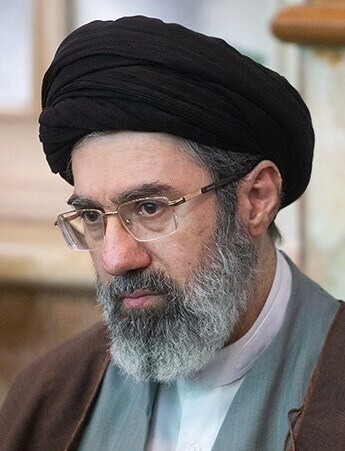
Iran's new supreme leader Mojtaba Khamenei has not appeared in public since taking power 40 days ago. All statements have been read by announcers. Here is what this means for Iran's governance and the peace talks.
- Iran's new supreme leader Mojtaba Khamenei has not appeared in public since taking power 40 days ago.
- In the 40 days since Mojtaba Khamenei was designated as Iran's new supreme leader following his father's assassination on the war's first day — February 28, 2026 — he has not been seen in public a single time.
- CBC News' April 9 reporting noted this specifically: "Iran's supreme leader Mojtaba Khamenei...
Iran's new supreme leader Mojtaba Khamenei has not appeared in public since taking power 40 days ago.
The Supreme Leader Nobody Has Seen
In the 40 days since Mojtaba Khamenei was designated as Iran's new supreme leader following his father's assassination on the war's first day — February 28, 2026 — he has not been seen in public a single time. Every statement attributed to him has been read by state television announcers or posted to official social media accounts. No photographs of him in the supreme leader role have been officially released. No video of him in his capacity as supreme leader has been broadcast.
CBC News' April 9 reporting noted this specifically: "Iran's supreme leader Mojtaba Khamenei... has still not been seen or heard from in public" since the ceasefire. The April 9 statement whose reading marked the 40-day mourning commemoration for his father was delivered in the specific format of text read by a TV announcer — a format that could represent either specific security concerns whose management requires minimizing his physical public exposure, or the particular political circumstance of a leader whose specific authority consolidation is incomplete enough that specific public exposure creates specific vulnerability.
The specific security explanation is the one most immediately available: the specific Israeli intelligence operation that assassinated his father on the first day of the war, combined with the particular ongoing Israeli military campaign that continued killing IRGC commanders throughout the conflict, creates the specific security environment whose management requires a new supreme leader to minimize his specific predictable locations. The particular physical targeting that eliminated his father at a known meeting location — Netanyahu called him and informed him of Khamenei's meeting location two days before the attack — is the specific operational precedent that his security team must prevent from being repeated.
The specific governance implications of a supreme leader who exercises authority exclusively through text statements read by others are significant. The particular legitimacy that personal public presence creates in Iranian political culture — where the supreme leader's specific religious authority is both institutionally defined and personally embodied — is the particular leadership capital whose accumulation requires the specific public presence that security concerns are preventing.
What His Specific Statements Have Said
The specific content of the statements attributed to Mojtaba Khamenei across his 40-day tenure reveals the particular strategic positioning that a new supreme leader navigating the specific combination of ceasefire diplomacy, domestic mourning, and external military threat is executing.
His first statement after the ceasefire — whose specific text included the particular command to "stop firing for the time being" alongside a separate message promising revenge — described the specific dual posture of temporary strategic restraint combined with stated long-term retaliation intention that the Islamic Republic's specific legitimacy narrative requires. A supreme leader who appears to simply accept the ceasefire without articulating the specific revenge commitment would fail the particular legitimacy test of Iranian hardliners whose specific support is the institutional foundation that supreme leader authority requires.
His April 9 statement — read at the 40-day mourning commemoration for his father — declared Iran the "definite victor," demanded compensation, and stated that Hormuz will enter a "new phase" of management. The specific combination of victory declaration and future sovereignty assertion over Hormuz provides the particular domestic political framework within which Iranian negotiators can proceed to Islamabad: they are going to negotiate from a position of having won, not from a position of ceasefire after defeat.
His statement that Iran "did not seek war and does not seek it" — combined with the specific commitment to revenge — is the particular diplomatic doublespeak whose function is creating the specific rhetorical space for continued diplomacy while maintaining the particular resistance narrative that Iranian governance requires domestically. These two specific positions are incompatible if taken literally; they are the specific tools of statecraft when understood as simultaneous communications to different specific audiences.
Why His Invisibility Complicates the Islamabad Talks
The specific diplomatic challenge that Mojtaba Khamenei's invisibility creates for the Islamabad talks involves the particular question of who actually speaks for the Iranian government with the specific authority that ceasefire terms require. Iranian Foreign Minister Araghchi is the specific public face of Iran's diplomatic presence. But in Iran's specific governing structure, the supreme leader's authority over foreign policy — including the specific Hormuz arrangements and nuclear commitments that any peace deal requires — is paramount.
A peace deal that Araghchi signs but Khamenei hasn't specifically and publicly endorsed is the particular agreement whose legitimacy within Iran's specific power structure is uncertain. The IRGC commanders whose specific operational decisions about Hormuz control, whose particular compliance with ceasefire terms requires their specific institutional buy-in — are aligned with the supreme leader rather than the foreign minister. An arrangement that produces specific foreign minister signatures but specific IRGC non-compliance is the particular ceasefire failure mode whose prevention requires the specific supreme leader authorization whose particular expression, from a supreme leader no one has seen, adds specific uncertainty to every specific agreement that Islamabad produces.