Military | Europe
Israel Launched Its Largest Attack on Lebanon While the Iran Ceasefire Was Active — Why
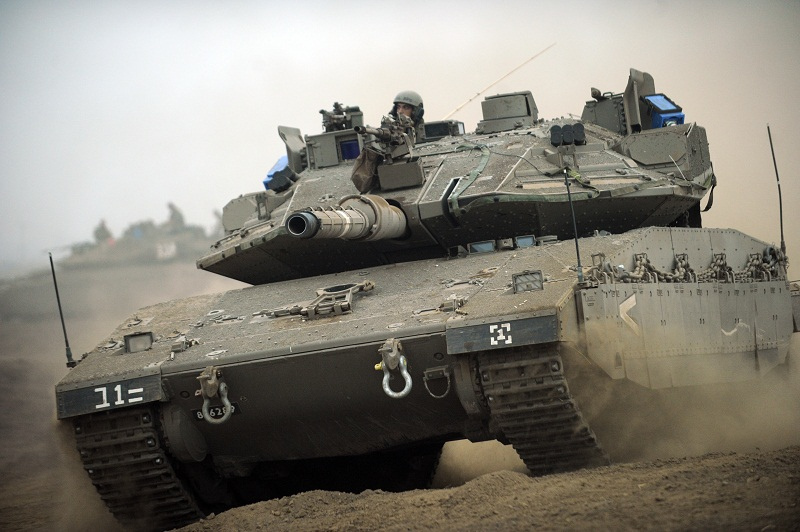
Israel launched its biggest Lebanon assault since the invasion began, killing 182 people, while the Iran ceasefire was hours old. Here is why Netanyahu did it and the legal and diplomatic consequences.
- Israel launched its biggest Lebanon assault since the invasion began, killing 182 people, while the Iran ceasefire was hours old.
- On Wednesday April 8, 2026 — the first full day of the US-Iran ceasefire that Pakistan had specifically stated included Lebanon — the Israeli Air Force launched what it described as its "largest attack across Lebanon" si...
- World Health Organisation Director-General Tedros Adhanom Ghebreyesus specifically objected to Israeli evacuation orders for the Lebanese capital's Jnah area, noting it was "operationally unfeasible" because two hospital...
Israel launched its biggest Lebanon assault since the invasion began, killing 182 people, while the Iran ceasefire was hours old.
The Strikes That Made a Fragile Ceasefire Shakier
On Wednesday April 8, 2026 — the first full day of the US-Iran ceasefire that Pakistan had specifically stated included Lebanon — the Israeli Air Force launched what it described as its "largest attack across Lebanon" since the ground invasion of that country began in March. At least 182 people were killed across Lebanon, including strikes in Beirut's Corniche al-Mazraa neighborhood and Tallet al-Khayyat area, both densely populated urban neighborhoods. Lebanese health authorities said hundreds more were wounded. The International Committee of the Red Cross issued a statement saying it was "outraged by attacks in densely populated urban areas."
World Health Organisation Director-General Tedros Adhanom Ghebreyesus specifically objected to Israeli evacuation orders for the Lebanese capital's Jnah area, noting it was "operationally unfeasible" because two hospitals there were "operating at full capacity" with approximately 450 patients including 40 in intensive care. "No alternative medical facilities are available," he said.
Israeli Prime Minister Benjamin Netanyahu's specific explanation, delivered in a video address Thursday, did not apologize for the timing relative to the ceasefire: "Israel will comply in Iran," he said, while stating he had ordered direct negotiations with Lebanon's government to achieve two goals — disarming Hezbollah and establishing a peace agreement. Israeli military spokesperson Lt. Col. Nadav Shoshani explained the tactical rationale: "We've seen Hezbollah disperse over different areas, taking advantage of the warnings that we provide for civilians to also hide for themselves among the civilians, moving, trying to scatter their operations in different locations and to hide behind civilian locations."
The Specific Diplomatic Geometry That Explains It
To understand why Israel launched its largest Lebanon assault at the precise moment of the Iran ceasefire, the specific incentive structure of Netanyahu's political situation requires examination. His criminal trial — corruption charges including bribery, fraud, and breach of trust — was scheduled to resume on Sunday April 13, and analysts including Iranian Foreign Minister Araghchi explicitly noted this: "A region-wide ceasefire, incl in Lebanon, would hasten his jailing," Araghchi posted on X, adding that Israel faces a choice to "crater its economy by letting Netanyahu kill diplomacy."
A full regional ceasefire — one that included Lebanon and reduced the military operational urgency that has been the specific political basis for wartime powers and emergency governance — would remove the specific justification for deferring his trial and potentially accelerate the specific legal accountability process whose specific outcome, given the charge severity, would likely end his political career and potentially his liberty.
This specific personal political calculation — whatever its morality — creates the particular structural incentive for an Israeli leader to maintain military operations in Lebanon even at the cost of disrupting a ceasefire that the United States, Pakistan, Iran, and most of the world wanted to see hold. The specific political rationality of Netanyahu's behavior, from his specific perspective, is the uncomfortable analysis that explains actions that appear diplomatically self-defeating from every other angle.
British Foreign Secretary Yvette Cooper, in language strong for a UK minister toward an Israeli government, called the Lebanon strikes "deeply damaging": "We want to see Lebanon included in the ceasefire. We want it extended to cover Lebanon, because otherwise that will destabilize the whole region. That escalation that we saw from Israel yesterday was deeply damaging, and we want to see an end to hostilities."
The Hezbollah Dimension and What Comes Next
Hezbollah — the Iranian-backed Lebanese militant organization whose specific military capacity has been the target of the Israeli invasion since March 2026 — held its fire on the ceasefire's first day but resumed rocket attacks into northern Israel on Thursday April 9 in response to continued Israeli strikes. The specific cycle whose continuation makes Lebanon the specific variable most likely to collapse the fragile US-Iran ceasefire is: Israeli strikes provoke Hezbollah rocket fire, which Israel cites as justification for more strikes, which Iran characterizes as ceasefire violations that obligate it to respond, which threatens the Hormuz arrangement that the ceasefire's economic value depends on.
Iran's IRGC commander Mohsen Rezaei affirmed Tehran's position clearly: "We stand with all our might alongside the Hezbollah mujahideen." Iran has consistently asserted that any ceasefire must include Lebanon. The specific US position — that Lebanon is not included — creates the particular impossible geometry where the Iran-US ceasefire cannot hold if Israel keeps bombing Lebanon because Iran will characterize continued Lebanon bombing as a ceasefire violation and resume operations accordingly.
Netanyahu's offer of direct talks with Lebanon's government — "First, the disarming of Hezbollah. Second, a historic, sustainable peace agreement between Israel and Lebanon" — represents the specific negotiated-resolution framework whose success would be genuine and historically significant but whose precondition (Hezbollah disarmament) is the specific outcome that decades of Lebanese politics and Hezbollah's specific organizational structure make extremely difficult to achieve in any timeframe consistent with the two-week ceasefire window.