Military | Europe
JD Vance Flew 16 Hours to Islamabad While Watching Artemis Splash Down Over the Black Sea — The Full Story of the Peace Talks
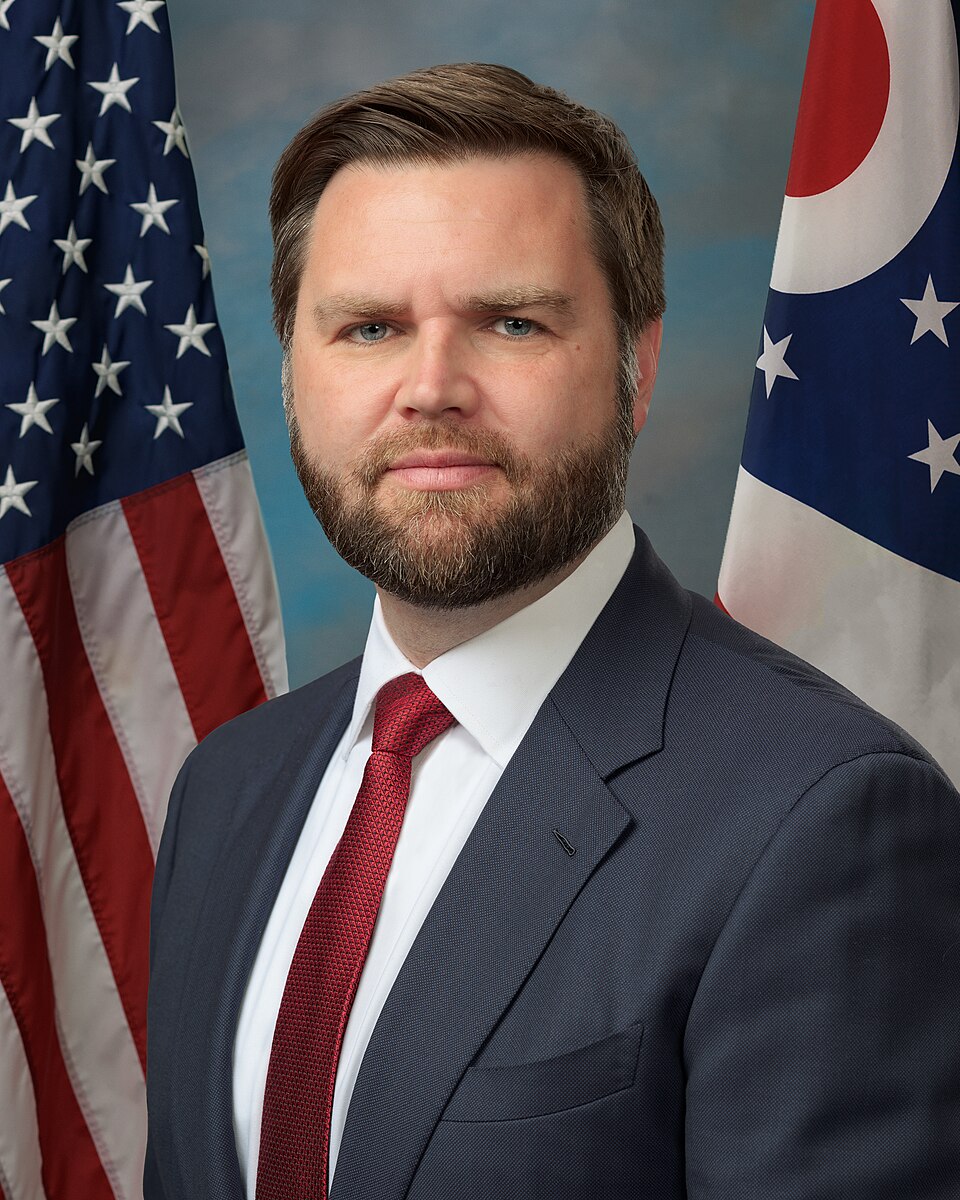
JD Vance left Washington at 8:40 AM Friday, flew 16+ hours to Islamabad, and watched Artemis II splash down over the Black Sea. Here is the complete story of the most consequential diplomatic trip in recent American history.
- JD Vance left Washington at 8:40 AM Friday, flew 16+ hours to Islamabad, and watched Artemis II splash down over the Black Sea.
- At 8:40 AM Eastern on Friday April 10, 2026 — the same morning that inflation data confirmed consumer prices had surged 3.
- The specific image that CBS News' live coverage captured — Air Force Two passengers watching NASA astronauts return from the Moon while their own aircraft carried the architects of a fragile ceasefire toward a negotiatio...
JD Vance left Washington at 8:40 AM Friday, flew 16+ hours to Islamabad, and watched Artemis II splash down over the Black Sea.
The Journey to Islamabad and What It Represents
At 8:40 AM Eastern on Friday April 10, 2026 — the same morning that inflation data confirmed consumer prices had surged 3.3% in March and just hours before Artemis II splashed down in the Pacific — Air Force Two departed the Washington DC area with Vice President JD Vance, Special Envoy Steve Witkoff, and presidential son-in-law and senior advisor Jared Kushner aboard, bound for Islamabad, Pakistan. The flight took more than 16 hours. When the wheels touched down at PAF Air Base Nur Khan at 1:29 AM local time Saturday — 1:29 PM ET Friday — the passengers had traversed European and Eastern European airspace, flown north of Iran, and crossed the Caspian Sea while watching live Fox News coverage of the Artemis II lunar mission's textbook splashdown somewhere over the Black Sea.
The specific image that CBS News' live coverage captured — Air Force Two passengers watching NASA astronauts return from the Moon while their own aircraft carried the architects of a fragile ceasefire toward a negotiation that will determine whether the most consequential Middle Eastern war in decades ends with durable peace or explosive resumption — is the kind of historical juxtaposition that most eras produce only in retrospect. This one was visible in real time.
A brief red-carpet ceremony welcomed Vance at the air base. Billboards with a dove symbol and the flags of both the United States and Pakistan lined the tarmac and the motorcade route into the city. Pakistan's digital branding for the event was explicit: across Islamabad's city center, digital billboards promoted these negotiations as "The Islamabad Talks" — the specific country's deliberate attempt to position itself as the geographic and institutional home of a Middle Eastern peace process whose successful conclusion would define Pakistani foreign policy's historical significance for decades.
Before departing, Vance issued a specific warning to Iranian negotiators: "I want to make sure that Iran does not play the United States here," he told reporters. The specific phrase — "play" — is the diplomatic language whose dictionary definition involves the particular deception or manipulation that experienced negotiators use as a frame for setting bad-faith behavior expectations before a negotiation rather than after it. It signals that the US team arrives with specific skepticism about Iranian intentions and a defined red line whose crossing would justify abandoning the process.
President Trump, simultaneously, told the New York Post that US warships were being reloaded with "the best ammunition, the best weapons ever made — even better than what we did previously." He added: "If we don't have a deal, we will be using them, and we will be using them very effectively." When asked if the talks would succeed: "We're going to find out in about 24 hours. We're going to know soon."
What the Talks Must Resolve and Why Each Issue Is Hard
The specific agenda of the Islamabad talks — which US and Iranian delegations were scheduled to enter on Saturday April 11 under Pakistani mediation — involves five issues whose particular difficulty can be described in ascending order of diplomatic intractability.
First: the physical Hormuz reopening. This is the most urgent and the most practically achievable. Iran has stated it will allow safe passage through coordination with its armed forces during the two-week period. The specific problem: only 7 ships transited on the ceasefire's first day, 3 on Thursday, and Fox News confirmed approximately 3,200 vessels were idling globally as shipping companies refused to risk passage through a strait whose specific security guarantees remained unclear. The Wikipedia Hormuz crisis documentation captures the particular bilateral arrangement whose evolution across the war's 40 days created the complex precedent whose post-ceasefire normalization requires: China, Russia, India, Iraq, Pakistan, Malaysia, Thailand, and the Philippines have each negotiated specific bilateral transit permissions for their specific flagged vessels. The particular transition from a bilateral permission system to universal free transit is the specific operational challenge whose resolution would allow the specific 3,200 idling vessels to begin moving.
Second: the Lebanon-Hezbollah dimension. Iran's position that Lebanon must be covered by the ceasefire is direct and consistent. The US position that Lebanon is a separate matter is equally direct and consistent. Israel's active bombing of Beirut neighborhoods — which continued through Friday — makes any Iranian position that the ceasefire holds while Lebanon burns politically untenable for Mojtaba Khamenei, whose specific authority requires demonstrating that Iran's specific resistance network is protected. Some form of Lebanon de-escalation framework — even a limited Israeli commitment to pause operations pending the Islamabad outcome — is the specific diplomatic achievement whose absence makes ceasefire continuation genuinely uncertain.
Third: Iranian frozen assets. CBS News' reporting included a significant specific detail in the Islamabad talks context: "US agrees to release frozen Iranian assets in Qatar, foreign banks, to ensure opening of Hormuz — senior Iranian source." This specific economic concession — releasing specific frozen funds that Iran has been unable to access due to sanctions — is the particular financial incentive whose value to an Iranian economy that Iran's Health Ministry has called catastrophically damaged creates meaningful negotiating pressure. The specific amount of frozen assets and the specific release mechanism are the negotiating details whose precise terms will determine whether this concession is real or theater.
Fourth: nuclear enrichment. The Trump administration's stated position — "there will be no enrichment of Uranium" — and Iran's stated position — "any attempt to limit Iran's enrichment of uranium will fail" — are direct opposites. The particular middle ground that previous negotiations occupied (enrichment limited to specific civil purposes under specific monitoring) is the specific framework that experienced negotiators from both countries know how to construct. Whether the specific political environment created by 40 days of war allows the specific negotiators who know how to construct that framework to do so within a two-week window is the particular question.
Fifth: US military presence in the region. Iran's 10-point plan called for withdrawal of US combat forces from regional bases. The US has 50,000 troops deployed with two carrier strike groups and nearly 20 warships. Trump confirmed they "will remain in place." Whether a schedule for eventual withdrawal, linked to specific Iranian compliance milestones, constitutes the particular concession whose framing allows both parties to claim consistency with their stated positions is the specific diplomatic creativity that Vance, Witkoff, and Kushner will need to produce.
The Specific Personnel and What They Bring
The specific US delegation's composition — Vance, Witkoff, and Kushner — reflects Trump's specific preference for personal relationship diplomacy over institutional State Department channels. Each of the three brings a specific attribute whose combination is intended to create the particular negotiating team whose effectiveness exceeds the sum of its parts.
Vance's specific role is political authority. As Vice President with Trump's explicit confidence and his specific prior direct contact with Pakistan's Field Marshal Munir, he carries the particular presidential mandate whose expression in specific concession authority allows him to make specific commitments on the spot rather than requiring the particular Washington consultation that institutional State Department channels would need. His specific warning to Iran not to "play" the US is the particular tough-talk signal whose credibility depends on the specific willingness to walk away that his presence at the specific level of Vice President communicates.
Witkoff's specific role is deal-making instinct. His specific background as a real estate developer whose particular business style involves finding the specific deal structure that satisfies the specific minimum requirements of specific counterparties — rather than the particular aspirational maximalist positions whose gap is the specific obstacle to agreement — is the particular approach whose application to the specific gap between US and Iranian publicly stated positions requires exactly the specific creative reframing whose execution his particular professional background has developed.
Kushner's specific role is back-channel relationship capital. His specific relationships with Saudi Crown Prince Mohammed bin Salman — built through specific multi-year engagement that spans Trump's first term and the specific business dealings whose particular form has been the subject of specific congressional and journalistic scrutiny — provide the particular Saudi leverage whose application to the specific Iranian negotiating position reflects the Gulf states' specific interest in a Hormuz resolution that their specific economies require. What Saudi Arabia wants is the particular diplomatic resource whose deployment by Kushner's specific relationships creates.
The Iranian delegation's specific composition — led by Foreign Minister Araghchi, whose particular experience in nuclear diplomacy dates to the specific JCPOA negotiations of the Obama era and who therefore has the specific institutional memory of what a prior US-Iran deal looks like from the Iranian side — creates the particular counterpart dynamic whose sophistication matches the specific US team's deal-making experience with a different specific kind of negotiating expertise.
Pakistan's specific hosting role — which its digital city-branding as "The Islamabad Talks" amplifies into national identity project — creates the particular mediator whose facilitation will be the specific determinant of whether the talks' ambiance produces the particular trust-building whose presence is the prerequisite for specific concessions that neither side can make unilaterally. Pakistan's specific interest in success is existential: a failed Islamabad talks whose collapse restarts the war creates the particular regional security environment whose specific geographic proximity to Pakistan — sharing a 900-kilometer border with Iran — makes the specific resumption of bombing campaigns in Iranian territory the particular security crisis that no Pakistani government can absorb without severe domestic consequences.