World | Europe
NATO Chief Says Allies Are Doing Everything Trump Asked — But There's a Problem
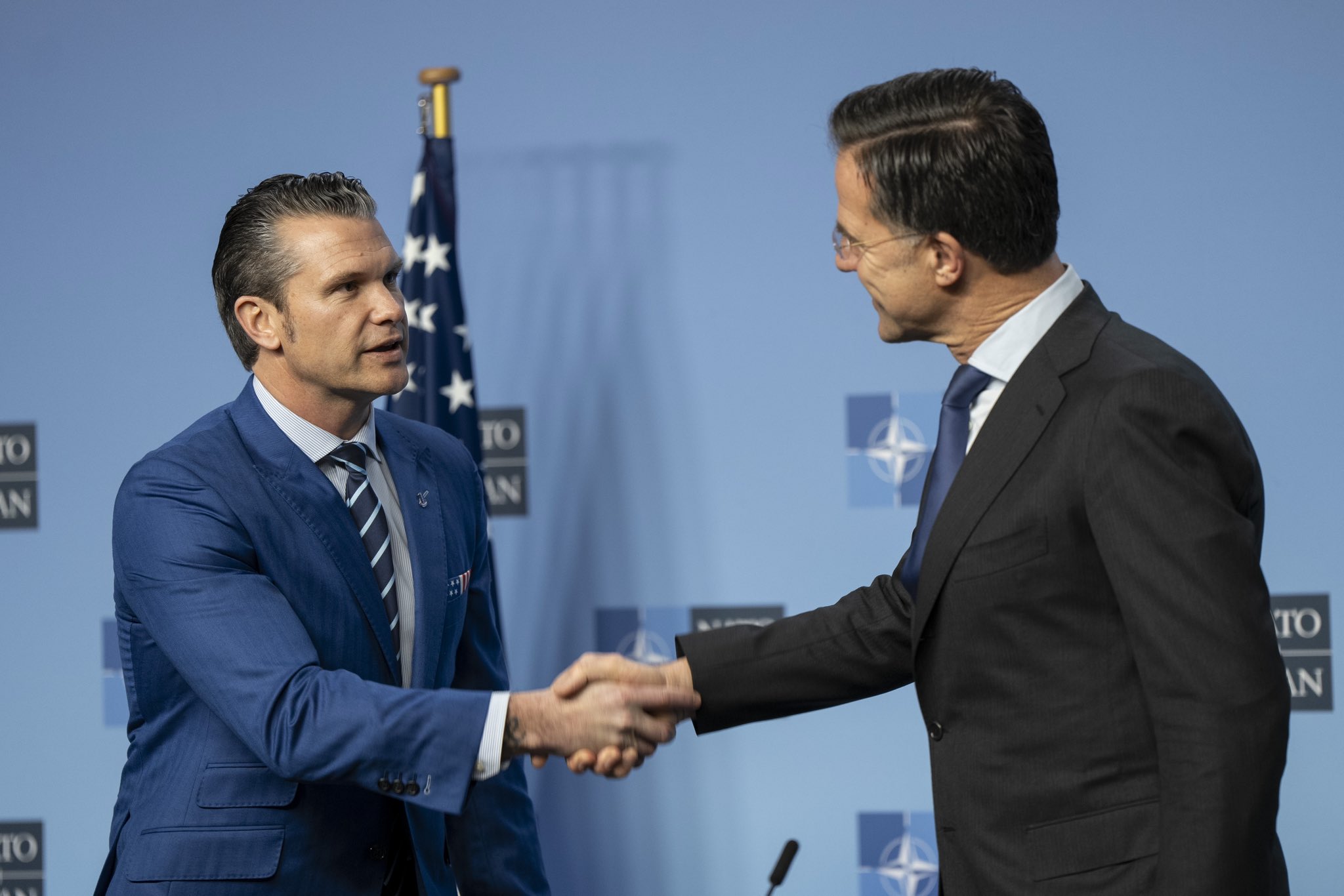
NATO Secretary General Mark Rutte said nearly all allies are doing everything the US asked on the Iran war. Here is what's actually being asked, who is doing what, and the specific tensions threatening the alliance.
- NATO Secretary General Mark Rutte said nearly all allies are doing everything the US asked on the Iran war.
- NATO Secretary General Mark Rutte, speaking at a scheduled address in Washington on Thursday April 9, 2026 — one day after the US-Iran ceasefire agreement had raised hope and one day into its specific fragility becoming...
- "Nearly without exception, allies are doing everything the United States has asked," Rutte said.
NATO Secretary General Mark Rutte said nearly all allies are doing everything the US asked on the Iran war.
The Alliance Under Unprecedented Pressure
NATO Secretary General Mark Rutte, speaking at a scheduled address in Washington on Thursday April 9, 2026 — one day after the US-Iran ceasefire agreement had raised hope and one day into its specific fragility becoming visible — delivered a specific message about Allied support for the American military effort that walked a careful line between reassurance and specific acknowledgment of alliance stress.
"Nearly without exception, allies are doing everything the United States has asked," Rutte said. He added: "The United Kingdom is leading a coalition of countries that are aligning the military, the political and the economic tools that will be required to ensure free passage through the Strait of Hormuz." Canada was specifically mentioned as having joined that UK-led coalition — a specific commitment whose articulation at this moment, when the ceasefire's Hormuz provisions are the specific point of maximum contention, carries specific diplomatic weight.
The "nearly without exception" phrasing is the particular language of a diplomat managing the specific gap between the general statement he needs to make and the specific reality that doesn't entirely support the general statement. Some allies are doing less than everything asked, and the particular formulation allows Rutte to assert near-universal compliance while acknowledging that the specific exception exists.
Trump's specific demands of NATO allies in the Iran war context have included logistical support, the use of European military bases for Iran campaign operations, specific intelligence sharing, and political support for the American military campaign's objectives. The particular variation across NATO member states in their comfort with each of those specific asks creates the alliance management challenge that Rutte is navigating.
What European Allies Are Actually Doing
Britain's specific role as the leader of the Hormuz freedom-of-navigation coalition is the most visible European military contribution to the Iran war's resolution phase. The UK had provided specific logistical support throughout the war — the use of RAF Akrotiri in Cyprus as a staging base for specific military operations, the particular intelligence-sharing relationship with NSA and CIA that the UKUSA Agreement institutionalizes, and the specific diplomatic support at the UN Security Council where British veto power prevents specific resolutions that would complicate the American campaign.
France's specific position has been more nuanced. The particular French diplomatic tradition of maintaining independent positions distinct from Washington — whose specific expression in the Macron government has included both general support for US Middle East objectives and specific public statements about international humanitarian law's application to civilian infrastructure that create diplomatic distance from specific US threats against power plants and bridges — describes an ally that is supporting while simultaneously signaling its specific discomfort.
Germany's specific contribution involves the particular constraints that its specific constitutional framework and political culture impose on military engagement: the specific Grundgesetz's limitations on overseas military operations, the particular domestic political sensitivity around Middle Eastern military involvement, and the specific Bundeswehr deployment capacity whose Iranian War engagement requires specific parliamentary authorization that the governing coalition has been managing.
The specific countries whose "nearly without exception" formulation covers their particular gaps include Hungary — whose specific Orbán government has maintained specific diplomatic relationships with Iran and Russia that create the particular uncomfortable contrast with NATO's collective Iran war position — and Turkey, whose specific Erdoğan government has simultaneously been part of the ceasefire mediation coalition and a NATO member whose specific geographic and economic interests create the particular complex relationship with both the US campaign and the Iranian response that Turkish diplomacy has been managing throughout.
The Hormuz Coalition and What It Means
The UK-led Hormuz coalition — whose specific membership includes Canada and additional allies whose specific commitments haven't been fully publicly disclosed — is the particular post-ceasefire implementation mechanism whose function would be ensuring that ships can actually transit Hormuz despite Iranian pressure, rather than relying solely on Iranian goodwill.
The specific operational concept of a freedom-of-navigation escort coalition is not new — the specific escort operations that the US Navy conducted in Hormuz during the 1980s Iran-Iraq War (Operation Earnest Will) are the historical precedent that naval strategists are consulting. In that specific 1987-1988 operation, US Navy ships reflagged Kuwaiti tankers as American vessels and provided specific naval escorts that deterred Iranian attack.
The particular 2026 version — involving a broader coalition including Britain and Canada — would need to navigate the specific post-ceasefire environment where Iran has agreed in principle to allow transit while simultaneously demanding tolls and characterizing Hormuz management as entering a "new phase." An escort operation that specifically prevents Iranian forces from boarding, inspecting, or charging ships creates the particular military confrontation risk that the ceasefire is supposed to be preventing.