Sports | Europe
Rory McIlroy Wins the Masters Again — Now He Belongs in Golf's Greatest Company
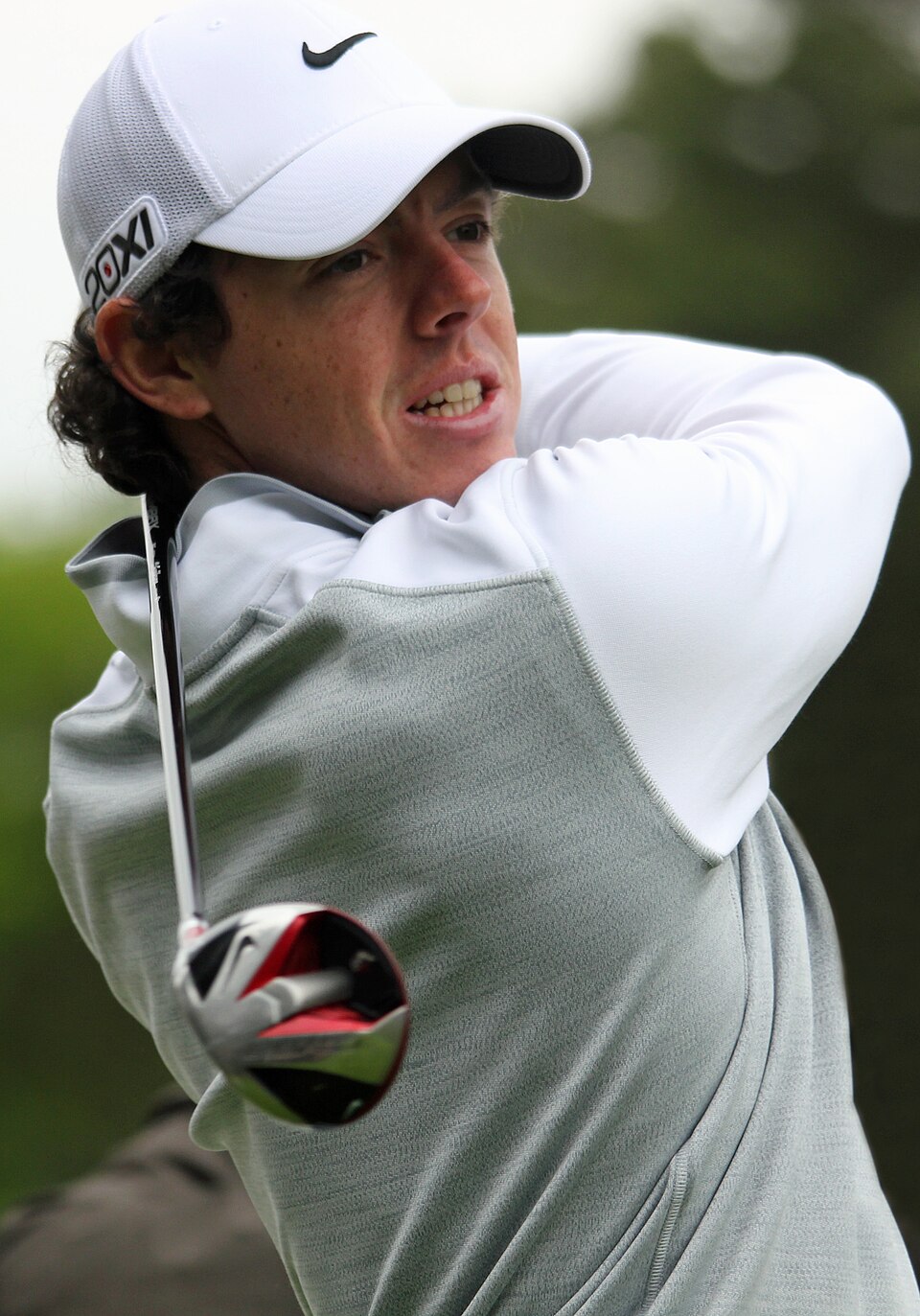
Rory McIlroy held on to win the 2026 Masters and become only the fourth player to win back-to-back at Augusta. Here is the full story of Sunday's final round and what this means for his legacy.
The Sunday That Completed the Transformation
At 18 holes to Augusta National on Sunday April 12, 2026, Rory McIlroy did not play the free, loose, attacking golf that he had managed for the first two rounds when he built the largest 36-hole lead in Masters history. He played something harder and, in its own way, more impressive: he survived.
He came to Augusta paired with Cameron Young, tied at 11-under after Saturday's stunning reversal. Scottie Scheffler lurked four behind. Sam Burns was three back. Shane Lowry, who had made a hole-in-one on Saturday, was two shots off the pace. Six players within four shots of the lead. The most open Masters final-round leaderboard in recent memory.
And McIlroy — the man whose Augusta demons had defined so much of his career before the 2025 breakthrough — shot a 1-under 71 that was just good enough. He made three birdies and two bogeys, scrambled when required, and walked off the 18th green as the 2026 Masters champion. The fourth player in history to win back-to-back at Augusta, joining Jack Nicklaus (1965-66), Nick Faldo (1989-90), and Tiger Woods (2001-02).
Cameron Young shot 70 and finished two shots back. Scottie Scheffler made his birdies on the par-5s at last but ultimately ran out of holes, finishing tied for third. Sam Burns and Shane Lowry both came close but could not produce the specific Sunday charge that the specific Augusta back nine requires.
The photograph that captures the moment: McIlroy on the 18th green, his fist clenched, his eyes closed for a fraction of a second that was visible from every camera angle at Augusta National on April 12, 2026. He celebrated on the 18th green, and then spoke to reporters with the specific self-awareness that distinguishes athletes who understand what has happened from those still processing it: "Last year proved I could win here. This year proved I belong here."
The Round That Required Everything He Learned in 2025
McIlroy's specific Sunday round wasn't the stuff of highlight reels. It was the stuff of genuine championship-level performance under genuine championship-level pressure — which are, when examined honestly, different things that require different skills.
His first hole: birdie at the first, hitting a crisp iron approach that settled six feet from the flag and holing the putt with the specific early confidence that settles anxiety. That specific opening birdie, in retrospect, may have been the round's most important shot — establishing the psychological register that the day's subsequent challenges tested but could not break.
Amen Corner: where Saturday's disaster had unfolded, where his two worst holes had cost him the lead. Sunday was different. He made pars at 11 and 12 with the specific professional focus that competitors who have suffered at specific places and returned to face them again report as qualitatively different from facing them without that history. The specific knowledge of what Augusta can do, absorbed through the specific worst way of learning it, created the specific alertness whose expression was specific patience and specific precision rather than the specific aggression that had occasionally appeared on Saturday.
The par-5 15th: McIlroy hit a driver and a 7-iron that stopped 12 feet below the hole, then rolled in the birdie putt that extended his lead. Young was watching from the fairway. Scheffler, who had birdied 13 and 14 to mount his charge, bogeyed 15 when his third shot spun back into the water — the specific Augusta hole whose specific cruelty on Sunday afternoon is the particular recurring Augusta story.
His specific final score: 17-under par, 271 total. Three shots ahead of Cameron Young. History made.
What Back-to-Back at Augusta Means for His Legacy
The specific company that Rory McIlroy now occupies — four-time major winner, career Grand Slam holder, and back-to-back Masters champion — places him in the particular historical conversation that requires honest assessment rather than mere superlative.
Nicklaus won six Masters and 18 majors total. Tiger won five Masters and 15 majors. Faldo won six majors total and three Masters. McIlroy has five majors, including back-to-back at Augusta. The specific gap between McIlroy's specific career record and the specific top of this specific list requires acknowledging both how far he has come — the specific 14 Augusta near-misses before 2025, the specific four-year Grand Slam pursuit whose completion in 2026 was simultaneously a personal breakthrough and a career milestone — and how much specific road remains between his specific current achievement and the specific historical peaks that Nicklaus and Woods occupy.
But for this specific Sunday in Augusta, those specific calculations are less important than the specific immediate reality: Rory McIlroy, from Holywood, Northern Ireland, is a two-time Masters champion, the current holder of the career Grand Slam, and the only player alive who has won the Masters in back-to-back years. When the specific Green Jacket was placed on his specific shoulders for the second consecutive time by last year's champion — himself — the specific Augusta tradition whose continuation across decades creates the specific weight that only those specific jackets carry was once again perfectly executed.