World | Europe
Orbán Is Gone: How Hungary's 'Illiberal Democracy' Collapsed in One Night and What Europe Does Next
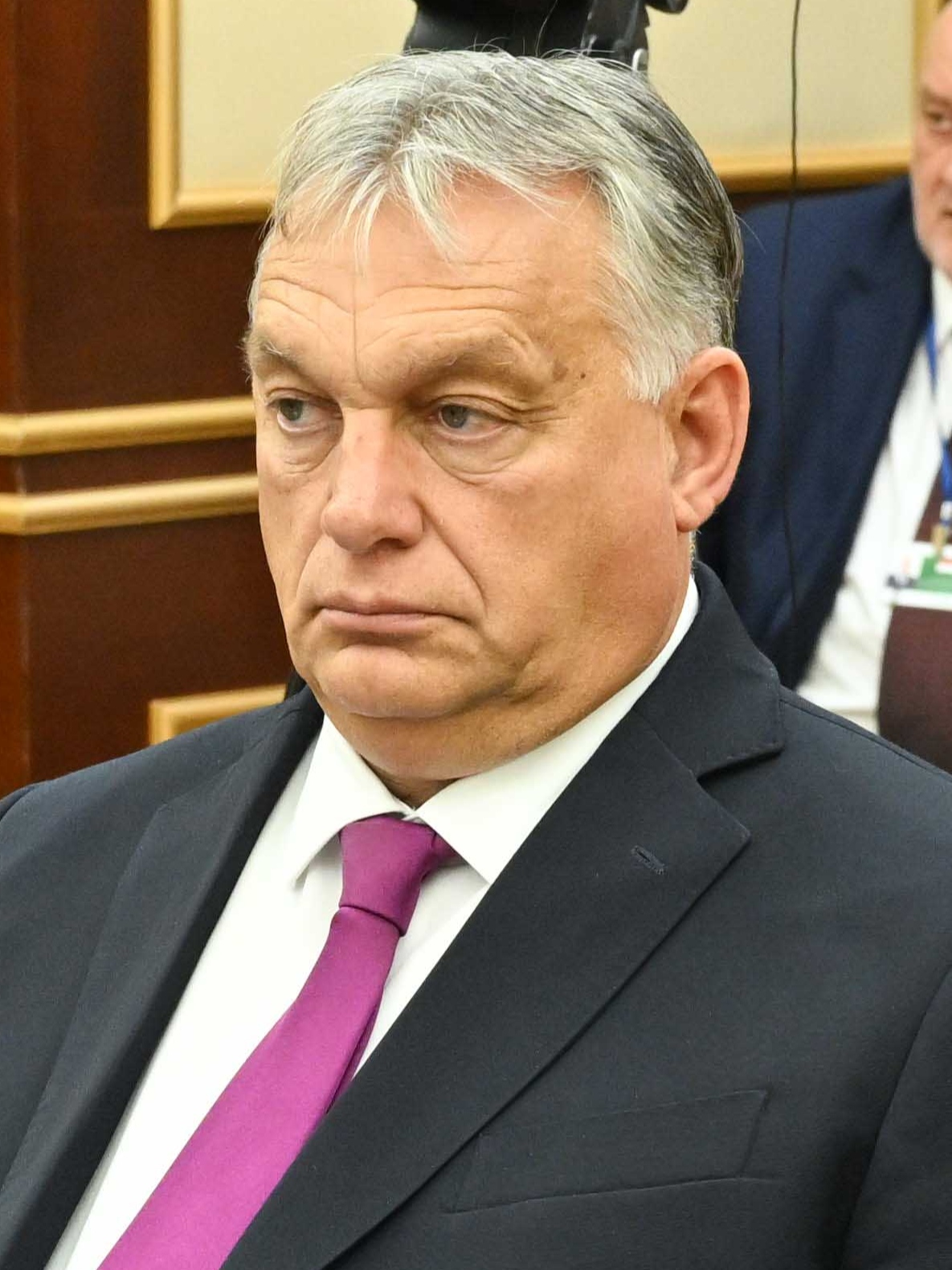
Viktor Orbán conceded defeat after 16 years in power as Péter Magyar's Tisza party won a supermajority with 138 of 199 seats. Here is the full story of the night that changed Europe.
The Night Orbán Said 'Painful' and Meant It
When Viktor Orbán stepped in front of cameras at his Fidesz party headquarters in Budapest on the evening of Sunday April 12, 2026, the man who had spent 16 years perfecting the political vocabulary of power had only one word left: painful. "The election results are not final yet, but the situation is understandable and clear," he said, before delivering the concession that almost nobody had predicted would come this cleanly, this quickly, this completely. "I congratulated the victorious party."
Across the Danube on the opposite bank, the scene was the most dramatic Budapest had witnessed since 1989. Thousands of Tisza supporters thronged the promenade along the right bank of the river waving Hungarian flags. Péter Magyar — the 45-year-old former Fidesz insider whose marriage to a senior Orbán minister had given him both the specific knowledge of the system's internal corruption and the particular credibility to speak about it — addressed the crowd with the kind of declaration that Hungarian democratic history will mark as one of its defining moments: "Together we replaced the Orbán regime, together we liberated Hungary. We took our country back."
With 99% of votes counted, the specific result was staggering. Magyar's Tisza party won 138 of 199 parliamentary seats — a two-thirds supermajority that mirrors, almost perfectly, the supermajorities that Orbán himself won four consecutive times since 2010 and used to reshape Hungary's constitution, pack its courts, shutter independent media, and build the specific "illiberal democracy" whose international influence had been one of the defining political developments of the past decade. Fidesz won just 55 seats. Magyar's vote total — 3.3 million Hungarians — is the highest any Hungarian party has ever received in the country's post-communist history.
"Never in the history of democratic Hungary have so many people voted, and no other party has ever received such a big mandate," Magyar said.
Turnout was 77%, the highest in any election since the fall of communism. The specific surge represents the particular phenomenon that specific political scientists identify as the "defeat threshold" — the level of mobilization at which the structural advantages of incumbency, media dominance, and gerrymandered electoral systems are overwhelmed by the sheer weight of voters who simply refuse to stay home.
What Orbán Built and What Magyar Inherits
Understanding what Sunday's result means requires understanding what 16 years of Fidesz rule actually constructed — and what dismantling it will take.
Orbán returned to power in 2010 after a first term in 1998-2002. In his second stint, he immediately moved to reshape the institutional landscape. His 2011 "Fundamental Law" — Hungary's new constitution, passed by a Fidesz-only parliamentary session — lowered the retirement age for judges, effectively purging the judiciary. It curbed media freedoms through a new media authority whose leadership Fidesz controlled. It restructured the electoral system to maximize the advantages of geographic concentration of the Fidesz vote base.
By 2014, he had given this project a name — "illiberal democracy" — and declared it openly at a summer camp speech that became one of the defining documents of European right-wing populism. He was not hiding what he was doing. He was branding it.
Over the following decade, Hungarian state media became effectively an Orbán propaganda operation. Independent outlets were bought by Fidesz-aligned oligarchs or driven to bankruptcy. The Central European University was effectively expelled from Hungary to Vienna. LGBTQ+ rights were progressively restricted. EU anti-corruption funds worth approximately €17 billion were withheld by Brussels over rule-of-law concerns.
His foreign policy was equally distinctive. He maintained bilateral energy agreements with Russia's Gazprom throughout Russia's invasion of Ukraine. He cultivated personal relationships with Vladimir Putin that alarmed NATO allies. Recent revelations showed that a senior Fidesz official had systematically leaked the contents of European Council discussions to Moscow — making Hungary functionally a Russian intelligence asset inside the EU's most sensitive deliberative body.
What Magyar inherits: a judiciary whose independence must be restored through specific legislative reversals; state media whose editorial independence requires specific structural changes; an electoral system whose specific gerrymandering favors Fidesz's geographic distribution even with Tisza's current dominance; and the particular frozen EU funds whose release depends on specific rule-of-law reforms that Brussels has been demanding for years and that Magyar has pledged to deliver.
The supermajority matters enormously here. With two-thirds of seats, Magyar's government can amend the Fundamental Law that Orbán used to entrench his system. This is the specific constitutional power whose absence would have left Magyar governing within a system designed to hamstring exactly the kind of reform he has promised.
What the Result Means for Trump, Putin, and the Global Far Right
The international dimensions of Sunday's result are substantial. Orbán had become the specific European figurehead of a particular model of illiberal conservative governance whose influence extended far beyond Hungary. His annual summer camp speeches were watched by American conservatives as intellectual dispatches from the future they were trying to build. His relationship with Trump was not merely diplomatic but ideological — a genuine partnership between leaders who shared a specific vision of nationalist, traditionalist, anti-globalist governance.
Trump's administration had gone to "extraordinary lengths" to support Orbán in the campaign's final stretch, per CNN's reporting. JD Vance visited Budapest on April 7 — in the same trip that preceded his Islamabad peace talks — specifically to appear with Orbán at a public event. Marco Rubio had recently sealed a civil nuclear cooperation agreement with Hungary. The specific weight of the American endorsement was both real and ultimately insufficient.
Europe's reaction to the result was as enthusiastic as any democratic election outcome has produced in years. European Commission President Ursula von der Leyen posted: "Europe's heart is beating stronger in Hungary tonight. Hungary has chosen Europe. A country reclaims its European path. The Union grows stronger."
For Putin specifically: Orbán's Hungary had been the specific EU member state most consistently useful to Russian interests within the bloc — the veto player whose single vote had blocked specific Ukraine aid packages, whose specific relationship with Gazprom had continued Russian energy revenues, and whose specific intelligence-sharing with Moscow had compromised EU internal deliberations. That specific asset disappears with Orbán's departure.
The broader global right-wing populist movement — for which Orbán had been the specific European laboratory and specific intellectual leader — absorbs its most significant electoral defeat in years. Steve Bannon's networks, Tucker Carlson's Hungarian broadcasts, the specific Americans who made pilgrimages to Budapest to study Orbán's methods: all of them are processing a result whose specific lesson for their movements is uncomfortable.