Military | Europe
The Islamabad Talks Failed After 21 Hours — Here Is Exactly What Went Wrong and What Comes Next
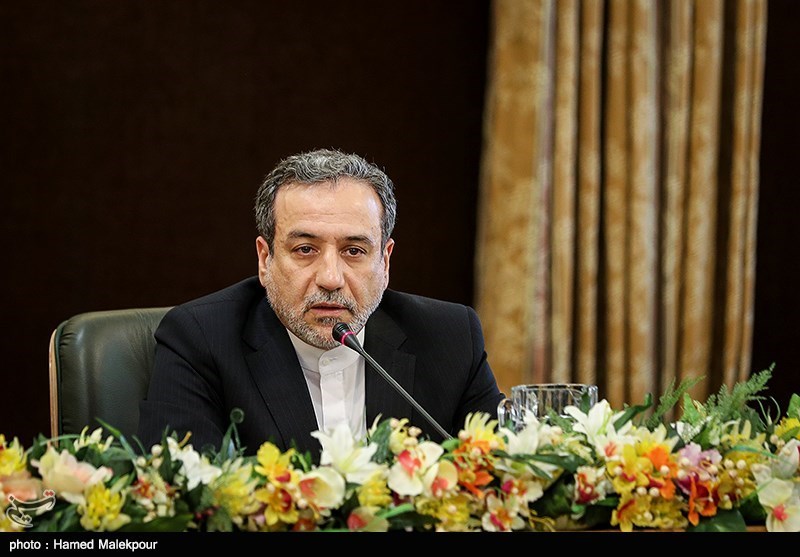
JD Vance and the Iranian delegation negotiated for 21 hours in Islamabad. They left without a deal. Here is the complete account of what broke down, who refused what, and whether the ceasefire now collapses.
- JD Vance and the Iranian delegation negotiated for 21 hours in Islamabad.
- The most consequential direct diplomatic encounter between the United States and Iran since the formation of the Islamic Republic in 1979 concluded on the morning of Sunday April 12, 2026 in Islamabad without an agreemen...
- The Iranian delegation, led by Parliament Speaker Mohammad Bagher Ghalibaf and accompanied by Foreign Minister Abbas Araghchi, had already departed Islamabad for Tehran when Vance spoke.
JD Vance and the Iranian delegation negotiated for 21 hours in Islamabad.
21 Hours, No Agreement, Two Very Different Explanations
The most consequential direct diplomatic encounter between the United States and Iran since the formation of the Islamic Republic in 1979 concluded on the morning of Sunday April 12, 2026 in Islamabad without an agreement. Vice President JD Vance, flanked by Steve Witkoff and Jared Kushner, stepped in front of cameras at a Pakistani media center and delivered the news with the specific bluntness that the outcome required: "The bad news is that we have not reached an agreement. And I think that's bad news for Iran much more than it's bad news for the United States of America."
The Iranian delegation, led by Parliament Speaker Mohammad Bagher Ghalibaf and accompanied by Foreign Minister Abbas Araghchi, had already departed Islamabad for Tehran when Vance spoke. Iranian state media's own explanation was delivered through Tasnim News Agency: the negotiations "concluded a few minutes ago and, due to what is described as US overreach and ambitions, the two sides have so far failed to reach an agreement."
The specific symmetry of those two explanations — the US attributing failure to Iranian inflexibility on nuclear weapons, Iran attributing failure to American overreach — captures the particular diplomatic impasse whose specific dimensions the 21 hours of negotiations clarified rather than resolved. Both sides arrived in Islamabad with maximalist public positions. Both sides made some movement in the specific negotiating room. Neither moved far enough.
CNN's correspondent in Islamabad provided the most candid professional assessment: "We watched the sun go down in Islamabad and then come up again as these marathon talks went on. To end without a deal marks a fundamental blow to nascent hopes of finding an off-ramp to this crisis. These were meetings of huge consequence — the highest-level talks between US and Iranian officials since the formation of the Islamic Republic in 1979 — and it's hard to underestimate just how complex the discussions have been." The specific diagnosis CNN offered for why the talks failed: "the two sides were simply too far apart, not just in substance, but in style and temperament. The respective delegations went into these talks with vastly different approaches: US Vice President JD Vance appeared to be after a relatively quick solution after the implementation of a two-week ceasefire, but Tehran typically moves much slower, negotiating over the long term."
The Nuclear Question That Broke Everything
When Vance described the specific issue that produced the impasse, his language was precise: "The simple fact is we need to see an affirmative commitment that they will not seek a nuclear weapon and they will not seek the tools that would enable them to quickly achieve a nuclear weapon. That is the core goal of the President of the United States."
He added a specific acknowledgment that gave significant ground: "Although Vance said during his remarks that Iran's enrichment facilities have been destroyed, he said the US did not see the 'fundamental commitment' from the Iranians not to develop a nuclear weapon in the long term."
This specific framing reveals the precise nature of the specific impasse: the US acknowledges Iran's specific enrichment infrastructure has been destroyed by the military campaign's specific strikes. What the US wants is not an argument about current capability — it is a specific forward-looking commitment whose particular form Iran was unwilling to provide. The specific demand is the particular piece of paper, the particular statement, the specific verified commitment that Iran will not rebuild toward nuclear weapons capability even after the war ends and reconstruction begins.
Iran's specific counter-position was articulated clearly before and during the talks. Parliament Speaker Ghalibaf, speaking before the talks began, had warned US negotiators that two preconditions must be met before negotiations could genuinely proceed: a ceasefire in Lebanon and the release of frozen Iranian assets. Neither had been satisfied. On the specific nuclear question, Iran's atomic energy chief had publicly stated that any attempt to limit enrichment would fail. The specific Iranian position — that nuclear enrichment is a sovereign right that no peace agreement can permanently extinguish — created the particular specific impasse that 21 hours of negotiation could not bridge.
Trump's specific framing of the US position before the talks added another specific dimension: "You're dealing against people that we don't know whether or not they tell the truth. To our face, they're getting rid of all nuclear weapons, everything's gone. And then they go out to the press and say, 'No, we'd like to enrich.'" This specific description — of a negotiating partner whose private and public statements diverge — reflects the particular credibility deficit that produces the specific demand for a verifiable commitment rather than merely a stated one.
What the Specific Technical Papers Revealed
Beyond the public statements, CNN reported that "technical papers were exchanged and reviewed repeatedly" during the 21 hours — a specific detail whose significance is that the talks went beyond political declarations into specific operational specifics. Technical papers in arms control negotiations typically address specific monitoring mechanisms, specific verification arrangements, specific facility access, and the specific timelines whose combination creates the particular operationalized version of the political commitments both sides need.
The specific exchange of technical papers suggests that both delegations were genuinely engaging with the specific substance of specific arrangements rather than merely restating public positions. The specific content of those papers — the particular monitoring proposals, the specific facility access arrangements, the specific verification timelines — is classified and not publicly disclosed. But their specific exchange, and the specific 21 hours during which they were "reviewed repeatedly," suggests that specific progress on specific technical dimensions was achieved even as the specific political impasse on specific core commitments prevented an overall agreement.
The specific UK minister Wes Streeting, speaking to Sky News Sunday, called the outcome "obviously disappointing" while emphasizing that "the priority now must be to continue the ceasefire and return to negotiations." Pakistan called on both parties to "uphold the ceasefire commitment after talks conclude without agreement." Iran's foreign ministry spokesperson provided the specific framing that suggests continued engagement: "Naturally, from the beginning we should not have expected to reach an agreement in a single session. No one had such an expectation. Tehran was 'confident that contacts between us and Pakistan, as well as our other friends in the region, will continue.'" This specific Iranian statement — characterizing the no-deal outcome as expected rather than catastrophic — reflects the particular long-game negotiating posture that CNN's correspondent identified as the specific stylistic difference between the two delegations.
What Comes Next: War or Continued Diplomacy?
The specific question that the failed talks create is whether the specific two-week ceasefire — whose remaining duration after the April 12 talks is approximately 9 days — continues, and whether new talks are organized before it expires. Trump's specific response to the failure was characteristically self-confident: "Regardless what happens, we win. We totally defeated that country. And so let's see what happens. Maybe they make a deal. Maybe they don't. From the standpoint of America, we win."
His specific statement about reopening Hormuz without Iran's cooperation — "Now all we do is we'll open up the strait even though we don't use it" — reflects the particular military confidence that the US has the specific capacity to force Hormuz reopening through specific naval escort operations, specific mine clearance, and the particular combination of specific military presence and specific diplomatic pressure that the specific 50,000 deployed US troops, specific two carrier strike groups, and specific 20 warships enable. Whether that specific confidence is warranted — whether the specific operational reality of Hormuz opening against Iranian resistance is as achievable as Trump's specific rhetoric suggests — is the particular military question whose answer will determine whether the specific ceasefire's expiration produces resumed strikes or sustained standoff.