Entertainment | Europe
The Olivier Awards 2026: Rachel Zegler Won Her First, Paapa Essiedu Dominated, and Rosamund Pike Surprised Everyone
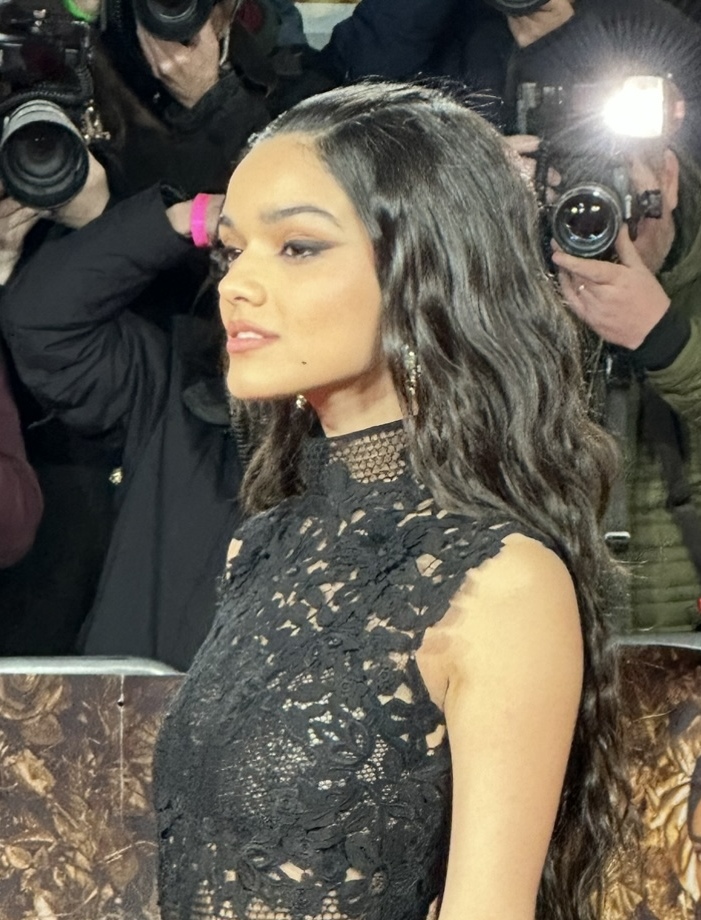
## A Night That Reaffirmed London's Position as the World's Theatre Capital The 2026 Olivier Awards — British theatre's equivalent of the Tony Awards in ambition, prestige, and the specific electricity that only live performance can generate — delivered an evening of genuine surprises alongside the expected celebration
A Night That Reaffirmed London's Position as the World's Theatre Capital
The 2026 Olivier Awards — British theatre's equivalent of the Tony Awards in ambition, prestige, and the specific electricity that only live performance can generate — delivered an evening of genuine surprises alongside the expected celebrations of the season's strongest work. The Royal Albert Hall, as always the ceremony's magnificent and slightly impractical venue, hosted another gathering of the artists, producers, and theatre-makers who collectively sustain one of the world's most vital performance cultures.
Rachel Zegler's first Olivier Award was among the evening's most emotionally resonant moments. Zegler — who broke through as María in Steven Spielberg's West Side Story remake, navigated a complicated period of public scrutiny during her involvement in Snow White, and has continued to build a career defined by her extraordinary voice and her willingness to take on challenging material — received her award for a West End performance that demonstrated dimensions of her stagecraft that film work cannot fully showcase. The Olivier is, in many ways, a more demanding credential than any film award for a performer of Zegler's type: theatre requires consistency over hundreds of performances, not the best version of a moment captured in a single take.
Her reaction at the podium was unguarded in the way that first major awards often are for performers who have worked toward them across years of dedication. She named specific colleagues, she acknowledged the particular importance of live performance to her artistic development, and she managed to be both poised and visibly moved simultaneously — a combination that is harder to achieve in a real acceptance speech than any fictional version of one.
Paapa Essiedu: A Dominant Season Recognized
Paapa Essiedu's Olivier win was less of a surprise and more of a confirmation. Essiedu has been one of the most discussed theatre performers working in Britain for the better part of a decade, combining the classical Shakespearean credentials earned at the RSC with a contemporary range that his television work — particularly in I May Destroy You and The Lazarus Project — has made visible to audiences who might not otherwise follow stage careers.
His 2025-2026 stage season was, by critical consensus, among the strongest any British actor has produced in recent years. The specific production for which he won was reviewed in terms that placed his performance in a conversation with the landmark stage work of previous generations — high praise in a tradition that has an unusually long institutional memory for excellence.
Essiedu's win also reflects a broader shift in the kind of performance the Olivier voters have been recognizing in recent years: less emphasis on a certain traditional mode of theatrical grandeur and more attention to the detailed, interior, psychologically specific work that the most compelling contemporary stage acting tends to involve. His particular gift is for making extraordinary internal states visible without resorting to the external signals that actors sometimes use as shortcuts to communication with large audiences. It works in a 600-seat theatre and it works at the Albert Hall camera, which is an unusual double.
Rosamund Pike's Surprise Win and What It Says About Her Stage Ambitions
Rosamund Pike has spent much of the past fifteen years establishing herself as one of the most interesting British film actresses of her generation — the cool precision of Gone Girl's Amy Dunne, the layered intelligence of her work in I Care a Lot and A Very English Scandal making it easy to think of her primarily as a screen performer. Her Olivier win in 2026 was therefore something of a recalibration for observers who had not been following her stage work closely.
Pike trained at Oxford and RADA, and her theatrical roots are deep, but her film career has consistently drawn the majority of critical attention. A West End season that earned her the Olivier is a reminder that she has never stopped being a stage performer — she has simply been doing most of her work in film and television.
The role for which she won required a particular combination of physical presence, vocal control, and the specific kind of charisma that projects across a large theatrical space without losing its internal specificity. Reviews had been strong throughout the run, but the award confirmed what those reviews had suggested: that this was not a film star doing theatre as a credibility exercise but a complete theatrical performance from a performer who knows exactly what she is doing on stage.
The 2026 Olivier Awards season as a whole reflected a West End that has continued to produce world-class work despite the persistent financial pressures on British theatre. The combination of established stars like Pike and Zegler alongside the continued recognition of career-defining stage work from specialists like Essiedu suggests a theatre culture that is drawing on multiple generations of talent simultaneously.