Sports | Europe
Bayern Beat Real Madrid 4-3 in the Greatest Champions League Night of the Decade — Here Is Every Insane Detail
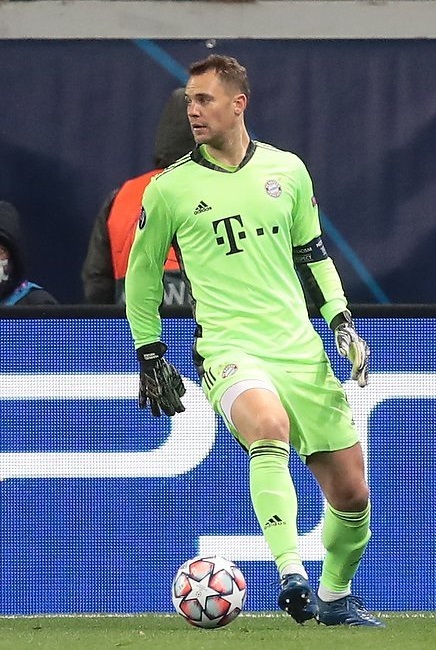
## Thirty-Five Seconds and a Golazo: How the Night Began It took Arda Güler thirty-five seconds to score. That is the official time recorded for the fastest goal Real Madrid have ever scored in the Champions League era — a distant, whipping strike from the Turkish midfielder that flew past Manuel Neuer before any of th
Thirty-Five Seconds and a Golazo: How the Night Began
It took Arda Güler thirty-five seconds to score. That is the official time recorded for the fastest goal Real Madrid have ever scored in the Champions League era — a distant, whipping strike from the Turkish midfielder that flew past Manuel Neuer before any of the 75,000 spectators at the Allianz Arena had fully settled into their seats. Bayern Munich, already trailing 2-1 from the first leg in Madrid, suddenly faced the kind of opening scenario that turns quarter-final nights into catastrophes. In the second minute, they were effectively losing the tie.
What followed across the next eighty-eight minutes of football was one of the most extraordinary matches the Champions League quarter-final stage has ever produced. Six more goals. A second Güler strike from a free-kick. Harry Kane dragging Bayern level twice. Kylian Mbappé, Jude Bellingham, and Vinícius Júnior combining for a third Real goal just before half-time that should have been decisive. A second-half that see-sawed between brilliant saves and near-misses. A red card in the 86th minute for substitute Eduardo Camavinga — his second yellow of the night, for two separate fouls in quick succession — that changed everything. And then, in the final four minutes, two Bayern goals from Luis Díaz and Michael Olise that sent the stadium into collective delirium and ended the night at 4-3 on the night, 6-4 on aggregate.
Real Madrid eliminated. Bayern Munich in the Champions League semi-finals.
The tie had been finely poised at 4-4 on aggregate going into those final minutes, with everything seemingly pointing toward extra time. Camavinga's dismissal — which Real manager Álvaro Arbeloa described as a decision that made his players "really upset and really angry" — removed their defensive anchor at the worst possible moment. Bayern, immediately sensing the opportunity, found Luis Díaz free outside the penalty area. His curling shot was deflected off Éder Militão and past Lunin. Three minutes later, with Madrid throwing men forward in search of the equaliser, Olise added a clinical finish with the final kick of the match.
Mbappé's Astonishing Record and Why It Matters Beyond This Game
Kylian Mbappé scored his 15th Champions League goal of the 2025-26 season with his predatory finish from a Vinícius pass just before half-time. The specific historical weight of that number requires context: only Cristiano Ronaldo, who scored 17 in 2013-14 and 16 in 2015-16, has scored more in a single Champions League campaign. Mbappé, despite his side's elimination, now sits alone in third place in the all-time single-season scoring records for the competition.
That he scored 15 in a campaign that ended in the quarter-finals is a function of the extraordinary personal performance he has delivered throughout the knockout rounds — Mbappé has been Madrid's best player by some distance this season, and his individual brilliance has repeatedly carried the team through moments where the collective effort would have been insufficient. The quarter-final exit is not his failure; it is the combination of Camavinga's inexplicable red card and Bayern's specific clinical finishing at the critical moments.
For Real Madrid as a club: this is their second consecutive Champions League quarter-final exit, having also been eliminated at this stage last season. Madrid manager Álvaro Arbeloa, in his first season managing the club he captained as a player, faces specific questions about squad development, squad depth, and whether the specific combination of Mbappé and Vinícius, brilliant as they both are, creates structural vulnerabilities in midfield and defence that Champions League opponents at the highest level are increasingly able to exploit.
Harry Kane's 12th Goal and Bayern's Path to Budapest
Harry Kane's goal was his 12th in this Champions League campaign and continued one of the more remarkable personal records in the competition's recent history: Kane has now been involved in a goal in each of his last five Champions League matches against Real Madrid — three goals and three assists across those five encounters. Against the most successful club in the competition's history, across multiple season, in different formats, Kane has consistently delivered at the specific moments that matter most.
Bayern now face Paris Saint-Germain in the semi-finals — a tie that pits the Bundesliga champions against the team attempting to become the first club other than Real Madrid to retain the Champions League trophy in the modern era. The semi-final will provide Vincent Kompany's Bayern with their most demanding test yet, against a PSG side that dispatched Liverpool 4-0 on aggregate in a demonstration of European authority that was one of the most commanding quarter-final performances in years.
Real Madrid's starting XI on Wednesday night was, according to Opta data, the first time in their 515 games in European competition that the club had named a starting lineup without a single Spanish player — a detail that speaks to the specific transformation the club has undergone under Florentino Pérez's latest generation of investments. Whether that transformation is producing results that match the financial ambition is the specific institutional question that two consecutive quarter-final exits forces Real Madrid to confront.